
I wake up every day already halfway into my job.
Before my feet hit the floor, I’ve checked WhatsApp, scanned overnight bookings, approved a same-day stay, answered one guest who “just has a quick question,” and declined another who somehow wants a refund before they’ve even arrived. Coffee is non-negotiable. Headset goes on early — not because I’m on calls all day, but because I might be at any moment.
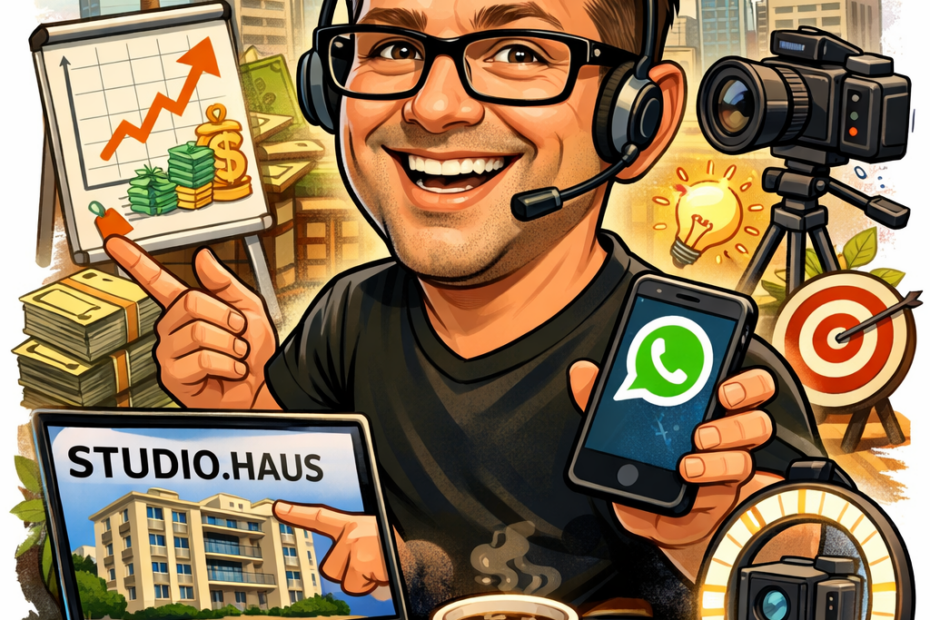
My office is wherever I am. Laptop open, phone in hand, camera nearby — because content doesn’t wait. One minute I’m reviewing a pitch deck, the next I’m filming a 30-second video explaining why occupancy is up 8% this month. Numbers float around my head like cartoons: ADR, ROI, cash flow arrows going up and to the right. I don’t chase them anymore — they chase me.
Guests think I run Airbnbs. I know I run systems.
Behind the scenes, automation is doing 70% of the work, but the remaining 30% is pure human judgment: when to say yes, when to say no, when to upgrade someone just because it feels right. Hospitality is still an art, even in 2026.
I juggle investor messages, property managers, cleaners, designers, and at least one person who wants to “pick my brain for five minutes.” There’s always a camera pointed at something — a new unit, a renovation, a location walkthrough — because transparency is currency now.
Some days feel like a beach day with a laptop. Other days feel like running a small airline from a coffee shop.
And somehow, in between WhatsApp pings, spreadsheets, espresso refills, and surprise wins, I remember: this isn’t chaos — it’s leverage. I don’t just rent rooms anymore. I build platforms, convert guests into long-term relationships, and turn real estate into something fluid, flexible, and alive.
It’s loud. It’s fast. It’s a little ridiculous.
But it’s real.